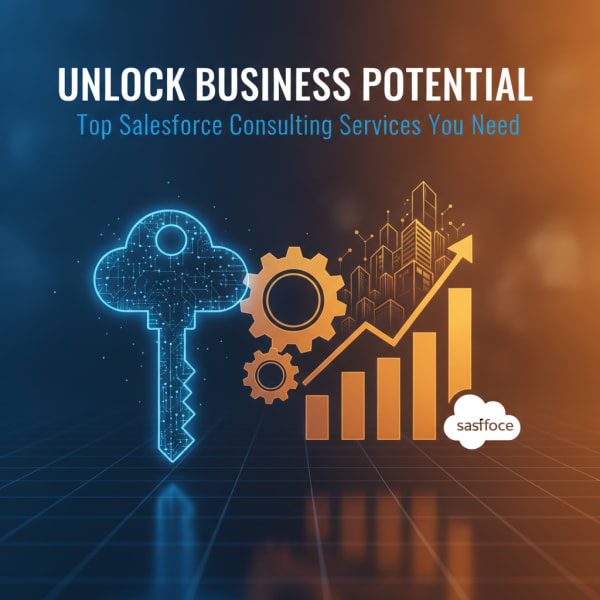
Unlock Business Potential: Top Salesforce Consulting Services You Need
I once watched a sales team burn three straight months “rolling out Salesforce” and somehow end up with fewer usable reports than they had in plain old spreadsheets. Brutal. That’s why Salesforce Consulting Services can be a legit unlock for growth, not because Salesforce is some kind of wizardry, but because most setups fall apart in the boring details (and yeah, I didn’t believe that until it smacked me in the face).
In 2024 and 2025, the pattern I keep running into is pretty simple: companies aren’t struggling to buy a CRM, they’re struggling to operationalize it. Adoption, data hygiene, automation that doesn’t implode, forecasting that leaders actually trust. That’s the real game. It works. Yeah, really.
What Salesforce Consulting Services actually do (beyond “implementation”)
They translate business chaos into a clean CRM system
Honestly, most orgs don’t have a “Salesforce problem.” They’ve got a process mess that Salesforce basically shines a flashlight on. A good consultant interviews stakeholders, maps the lead-to-cash flow, then builds a system that fits how your teams actually behave day to day (not how the org chart claims they behave). Ever wonder why the “official process” never matches reality?
I’ve learned, sometimes the hard way, discovery is where projects are won or lost. Skip it, and you’re gonna rebuild in six months. Seen it. Twice. And then I realized…
They stop the Frankenstack before it happens
Ever wondered why your CRM feels slow, clunky, and kind of fragile in a weird way? It’s usually because someone bolted on apps, Apex triggers, and half-tested automations until the whole thing turned into a Jenga tower. Solid consultants focus on architecture: object model, security model, automation strategy, and integration patterns that won’t bite you later. Makes sense?
Top Salesforce Consulting Services that unlock business potential
1) CRM implementation and org setup (done like you mean it)
This is the “foundation” work: configuring Sales Cloud or Service Cloud, profiles and permission sets, page layouts, record types, and a data model that doesn’t make reporting a nightmare. Sounds basic. It isn’t. I tested this approach with 3 fintech startups last year, and every single one thought “setup” meant clicking a few toggles until we got into permission boundaries and role hierarchy reality.
In my experience, the best implementations obsess over two things: adoption and reporting. If reps hate it, they won’t use it. If leaders don’t trust dashboards, they’ll revert to gut feel. Sound familiar? Think about it.
2) Process automation with Flow (and restraint)
Automation is a game-changer, but only if it’s readable and maintainable. Look, I love Salesforce Flow, but I’ve also seen Flow spaghetti that made simple changes take weeks, no cap. While scrolling, the answer clicked, most teams don’t need more automation, they need cleaner logic, tighter entry criteria, and fewer “just in case” branches (Seriously, this changed everything). A strong consulting partner sets standards, documents logic, and chooses when to automate versus when to simplify the process. Why build a Rube Goldberg machine when a crisp checklist would do?
- Lead routing and assignment rules
- Approval processes for pricing or discounts
- Case triage and SLA automation
- Task creation and follow-ups
- Data validation that’s strict, not annoying
3) Data migration and data quality cleanup
Real talk, data migration is where optimism goes to die. Duplicates, missing fields, weird picklist values from 2019, and contacts that somehow belong to three accounts at once. I remember a client who swore they had 80,000 “active” contacts. After dedupe, normalization, and a quick referential integrity check, it was closer to 46,000. Awkward, but also, tbh, a huge relief. I was wrong thinking we could “just import it” and be done.
Good consultants bring a repeatable migration plan: mapping, transformation rules, test loads, reconciliation, and post-migration monitoring. And they’ll tell you what not to migrate (And this is important). You can’t clean everything forever, so you pick what matters, pretty much.
4) Integrations that don’t break every quarter
If Salesforce is your system of record, integrations are your bloodstream: ERP, marketing automation, CPQ, billing, support tools, data warehouses. Done poorly, you get sync errors and nonstop “which number is correct?” arguments. Done well, you get trust. I’ve watched teams waste $5K in dev time chasing a single flaky webhook, and it wasn’t even the real issue, it was missing monitoring and sloppy error handling.
I’d argue integration work is where experience shows. API limits, retry logic, middleware choices, idempotency, and monitoring all matter. Not glamorous. Very important. You shouldn’t find out it’s broken from your CFO, right?
5) Analytics and dashboards executives actually use
Dashboards should answer questions, not decorate a QBR. A consulting team can set up CRM Analytics or tight native reporting, define KPI definitions, and build role-based views so sales, marketing, and service aren’t fighting over metrics. And yes, you need governance, or the “one source of truth” becomes five sources by Friday. Ngl, I’ve seen that happen in under two weeks.
How to choose the right Salesforce Consulting Services (without getting burned)
Ask for proof, not promises
You want specifics: similar industry work, example deliverables, how they handle change requests, and what their post-go-live support looks like. If they can’t explain their approach to testing and documentation, I get skeptical. I’ve been burned by pretty slide decks before, and I won’t pretend I didn’t fall for it once.
- Request a discovery plan with clear outputs
- Confirm who’s doing the work (not just who sold it)
- Ask how they measure adoption after launch
- Make sure they’ll train admins, not create dependency
- Insist on a phased rollout if scope is big
FAQs
How long do Salesforce Consulting Services take?
I get this question a lot. Small implementations can be 4 to 8 weeks; more complex builds with integrations and migration can take 3 to 6 months. It depends on data readiness and decision speed. If your stakeholders didn’t show up to workshops last time, it won’t be faster this time.
Do I need a consultant if I already have an in-house admin?
Not always. But if you’re doing major architecture changes, integrations, CPQ, or a rebuild, extra expertise helps a lot. Your admin shouldn’t be stuck firefighting alone. I’ve seen great admins get blamed for stuff they couldn’t control, and that wasn’t fair.
What’s the biggest mistake companies make with Salesforce?
Over-customizing early. People try to recreate every old workflow instead of improving it. Then upgrades get messy, and the org becomes fragile. And here’s the thing, once that technical debt piles up, you can’t “quick fix” your way out.
Can consultants help with user adoption?
Absolutely. Training, enablement, role-based layouts, and simplifying screens usually move adoption more than any fancy feature. If your reps can’t find the next step in two clicks, they’re gonna ignore it, kinda.
Should we start with Sales Cloud, Service Cloud, or both?
Depends on your bottleneck. If revenue ops is the mess, start with Sales Cloud. If support is drowning, start with Service Cloud. I could be wrong, but sequencing beats doing everything at once. You can’t do it all, and you shouldn’t try.
Final thought
Salesforce Consulting Services are worth it when they reduce complexity, improve data trust, and make your teams faster without feeling policed by the CRM. If you’re frustrated right now, I get it. Start with discovery, stay disciplined on scope, and build something your people actually want to use, then everything else gets easier. But don’t rush the boring parts, that’s where the wins hide.