Salesforce Security & Compliance Checklist for 2026
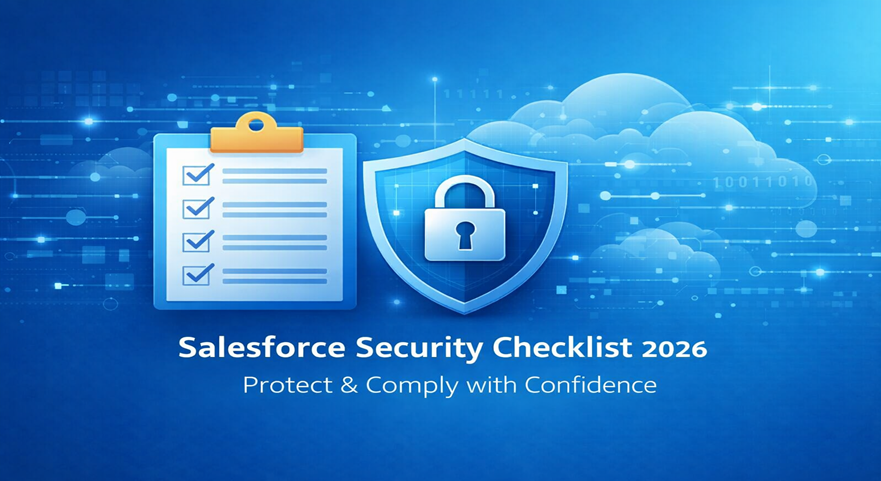
Implementing a strong Salesforce Security Checklist is essential for protecting sensitive customer data, preventing unauthorized access, and ensuring compliance with global regulations. As organizations rely heavily on CRM systems, the Salesforce Security Checklist helps administrators and IT teams establish robust protection mechanisms. Following a structured Salesforce Security Checklist reduces risks such as data breaches, compliance violations, and internal misuse. This guide provides a complete Salesforce Security Checklist covering authentication, access control, data protection, monitoring, and compliance best practices for 2026.
Why Salesforce Security Checklist is Critical in 2026
A properly implemented Salesforce Security Checklist ensures that only authorized users can access business-critical information. CRM systems store financial records, customer identities, contracts, and confidential communications, making them prime targets for cyber threats.
According to the official Salesforce security guidelines available on the Salesforce Security Overview, organizations must implement layered security including authentication, encryption, and monitoring. Following a structured Salesforce Security Checklist improves operational safety and builds customer trust.
Key benefits include:
- Protection against unauthorized access
- Compliance with global regulations (GDPR, ISO, SOC 2)
- Prevention of data breaches
- Improved customer trust and credibility
- Strong governance and audit readiness
A comprehensive Salesforce Security Checklist ensures business continuity and data integrity.
User Authentication and Access Control
Authentication is the first and most critical step in the Salesforce Security Checklist. It ensures only verified users access the system.
Enable Multi-Factor Authentication (MFA)
Multi-Factor Authentication adds an extra layer of protection beyond passwords. Salesforce requires MFA for all users accessing sensitive data.
Learn more from Salesforce Multi-Factor Authentication best practices.
Best practices include:
- Enable MFA for all users
- Use authenticator apps instead of SMS
- Enforce strong password policies
- Disable inactive accounts
Implementing MFA strengthens the Salesforce Security Checklist significantly.
Configure Role-Based Access Control (RBAC)
Role-based access ensures users only access relevant information. This is a core component of the Salesforce Security Checklist.
Configure:
- User roles and profiles
- Permission sets
- Field-level security
- Object-level permissions
This prevents internal data misuse and improves system control.
Data Protection and Encryption
Protecting stored and transmitted data is a critical part of the Salesforce Security Checklist.
Enable Salesforce Shield Encryption
Salesforce provides advanced encryption using Shield Platform Encryption. Learn more from the Salesforce Shield Platform Encryption page.
Benefits include:
- Encryption of sensitive data fields
- Protection of financial information
- Compliance with security standards
- Secure storage of customer information
Encryption strengthens your Salesforce Security Checklist and protects critical business data.
Enable Secure Network Access
Network-level security ensures safe access to Salesforce.
Best practices:
- Restrict login IP ranges
- Use VPN access
- Enable session timeout policies
- Monitor login activity
These measures enhance the Salesforce Security Checklist and prevent unauthorized access.
Monitoring, Auditing, and Threat Detection
Monitoring system activity is essential for identifying threats early. A proactive Salesforce Security Checklist includes continuous monitoring.
Enable Audit Trails
Audit trails track system activity and user actions. Learn more from Salesforce Audit Trail Documentation
Audit logs help:
- Detect suspicious activity
- Identify unauthorized changes
- Support compliance audits
- Improve accountability
Audit trails are a vital part of the Salesforce Security Checklist.
Enable Event Monitoring
Event monitoring provides real-time visibility into system usage.
Track:
- Login activity
- Data exports
- API access
- File downloads
Event monitoring strengthens your Salesforce Security Checklist and helps prevent data leaks.
Compliance and Regulatory Requirements
Compliance ensures your CRM follows legal and industry regulations. A complete Salesforce Security Checklist includes compliance configuration.
Salesforce complies with major standards listed on the official Salesforce Compliance Certification Page
Supported standards include:
- GDPR
- SOC 2
- ISO 27001
- HIPAA
- PCI DSS
Following compliance standards ensures your Salesforce Security Checklist meets global security requirements.
Backup and Disaster Recovery Planning
Backup and recovery ensure business continuity during failures. This is an essential part of the Salesforce Security Checklist.
Best practices include:
- Schedule regular data backups
- Use automated backup solutions
- Test recovery procedures
- Maintain backup logs
Backup planning completes your Salesforce Security Checklist and protects against data loss.
Security Monitoring Best Practices for Admins
Salesforce administrators must continuously maintain the Salesforce Security Checklist.
Recommended actions:
- Review user access regularly
- Remove inactive users
- Monitor login history
- Enable security alerts
- Conduct regular security audits
Continuous monitoring ensures your Salesforce Security Checklist remains effective.
Common Security Mistakes to Avoid
Avoiding security mistakes is crucial when implementing a Salesforce Security Checklist.
Common mistakes include:
- Weak password policies
- Excessive user permissions
- Disabled MFA
- Lack of monitoring
- No backup strategy
Avoiding these mistakes improves CRM security.
Conclusion
A properly implemented Salesforce Security Checklist protects sensitive customer data, ensures compliance, and strengthens business operations. Authentication, access control, encryption, monitoring, and backup planning form the foundation of a secure Salesforce environment.
Organizations that follow this Salesforce Security Checklist reduce security risks, maintain regulatory compliance, and build customer trust. Implementing these best practices ensures long-term CRM security and operational reliability.
Secure Your Salesforce CRM with Experts
Implementing a complete Salesforce Security Checklist requires expertise, planning, and continuous monitoring. Tech i-vin Technology helps businesses configure Salesforce security, implement compliance controls, and protect critical CRM data.
Tech i-vin Technology provides:
- Salesforce security configuration
- Compliance implementation
- Access control setup
- Monitoring and auditing solutions
- End-to-end Salesforce consulting
Contact Tech i-vin Technology to secure your Salesforce CRM and ensure full compliance in 2026.