
Optimizing NetSuite Workflows for Operational Efficiency in 2026
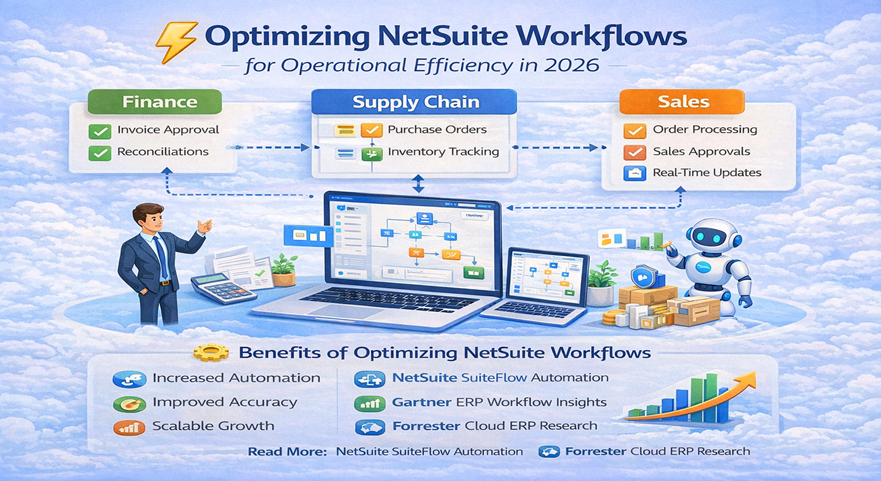
Optimizing NetSuite Workflows is a critical focus area for organizations aiming to strengthen operational efficiency in 2026. As enterprises grow, manual processes, fragmented approvals, and inconsistent data handling often slow down business performance. By strategically automating workflows within NetSuite, organizations can streamline operations, reduce process delays, and achieve better visibility across departments.
With increasing reliance on cloud ERP platforms, businesses are moving beyond basic automation. Optimizing NetSuite Workflows now plays a key role in aligning operational processes with compliance, scalability, and long-term digital transformation goals.
The Strategic Importance of Optimizing NetSuite Workflows
In 2026, operational efficiency depends on how well internal processes are automated and governed. Optimizing NetSuite Workflows enables businesses to replace manual interventions with rule-based automation, ensuring faster execution and higher accuracy.
According to industry analysis from
Gartner ERP workflow optimization insights,
organizations that standardize and automate ERP workflows consistently outperform peers in productivity and cost control.
Key Drivers Behind Workflow Optimization
- Growing transaction volumes
- Demand for real-time operational data
- Regulatory and audit requirements
- Reduced dependency on human approvals
Core Capabilities Supporting Optimizing NetSuite Workflows
SuiteFlow-Based Workflow Automation
SuiteFlow is central to Optimizing NetSuite Workflows, allowing organizations to automate processes without heavy development effort.
Businesses using
NetSuite SuiteFlow automation
can design workflows that respond automatically to business events such as record creation, status changes, or approval thresholds.
Key capabilities include:
- Event-driven workflow triggers
- Automated approvals and escalations
- Conditional logic for complex business rules
- Notifications and task assignments
Department-Wise Impact of Optimizing NetSuite Workflows
Finance and Accounting Operations
Optimizing NetSuite Workflows significantly improves financial accuracy and control by automating repetitive finance tasks.
- Invoice approval workflows
- Journal entry validation rules
- Period-close task automation
This reduces manual errors and accelerates month-end and year-end closing cycles.
Supply Chain and Inventory Management
Workflow optimization ensures better coordination between procurement, inventory, and vendor management teams.
- Automated purchase order approvals
- Reorder point triggers
- Vendor compliance checks
Best practices aligned with
Oracle Cloud ERP best practices
help organizations maintain strong governance across supply chain workflows.
Sales and Order Management
Sales operations benefit from Optimizing NetSuite Workflows through faster order processing and reduced operational friction.
- Automated order validation
- Credit limit checks
- Fulfillment and billing status updates
This results in improved customer experience and reduced revenue leakage.
Best Practices for Optimizing NetSuite Workflows in 2026
Design for Scalability
Workflow logic should support business growth without frequent rework.
Apply Conditional Logic Thoughtfully
Smart conditions ensure workflows handle real-world scenarios accurately.
Monitor and Optimize Continuously
Regular reviews are essential for Optimizing NetSuite Workflows as business requirements evolve.
Recommended actions:
Insights from
Forrester cloud ERP automation research
highlight that continuous workflow optimization is a key differentiator for high-performing organizations.
Governance, Compliance, and Audit Readiness
Optimizing NetSuite Workflows strengthens internal controls by enforcing approval hierarchies and maintaining automated audit trails. Every transaction follows predefined rules, improving compliance readiness and simplifying audits.
By aligning workflows with industry standards and ERP governance frameworks, organizations can reduce risk while maintaining operational agility.
Future Outlook: Optimizing NetSuite Workflows Beyond 2026
As ERP platforms evolve, Optimizing NetSuite Workflows will increasingly incorporate:
- AI-driven approval recommendations
- Predictive alerts for operational risks
- Deeper integration with analytics and dashboards
These advancements will further enhance decision-making and process efficiency across enterprises.
Conclusion
Optimizing NetSuite Workflows is a foundational element of operational excellence in 2026. From finance and supply chain to sales and compliance, workflow optimization enables faster processes, improved accuracy, and scalable growth. Organizations that invest in structured workflow design today position themselves for sustained efficiency and competitive advantage.
Call to Action
Planning to implement or enhance Optimizing NetSuite Workflows for your business?
Connect with Tech i-vin Technology to design, customize, and optimize NetSuite workflows that align perfectly with your operational goals and future growth plans.