
NetSuite Fixed Asset Management: Track and Manage Assets Efficiently (2026)
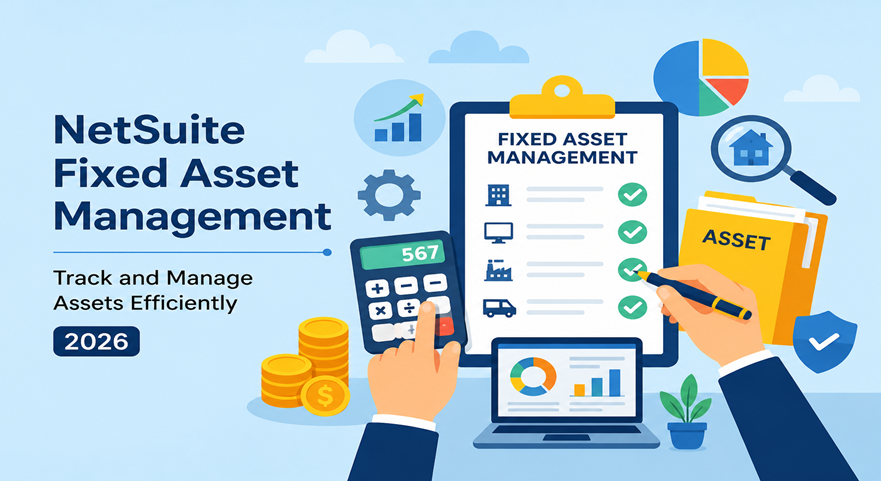
NetSuite Fixed Asset Management is a powerful solution designed to help businesses efficiently track, manage, and optimize their fixed assets across their lifecycle. From acquisition to depreciation and disposal, NetSuite Fixed Asset Management simplifies complex asset processes through automation and real-time tracking. Organizations dealing with large volumes of assets often struggle with manual errors, compliance issues, and inaccurate reporting. This is where NetSuite Fixed Asset Management ensures accuracy, transparency, and better financial control. By leveraging this system, companies can improve operational efficiency, maintain compliance, and gain deeper insights into asset performance.
What is NetSuite Fixed Asset Management?
NetSuite Fixed Asset Management is a comprehensive module within NetSuite ERP that allows businesses to manage the entire lifecycle of fixed assets.
It provides tools to:
- Track asset acquisition and ownership
- Automate depreciation calculations
- Manage asset transfers and disposals
- Maintain compliance with accounting standards
To understand ERP systems better, explore NetSuite ERP Guide.
Key Features of NetSuite Fixed Asset Management
1. Automated Depreciation Management
One of the strongest advantages of NetSuite Fixed Asset Management is automated depreciation.
- Supports multiple depreciation methods
- Eliminates manual calculation errors
- Generates accurate financial reports
Learn more at IFRS Official Website.
2. Complete Asset Lifecycle Tracking
With NetSuite Fixed Asset Management, businesses can track assets from procurement to disposal.
- Asset creation and categorization
- Transfer between departments
- Disposal and retirement tracking
3. Real-Time Reporting & Visibility
NetSuite Fixed Asset Management provides real-time dashboards and reports.
- Asset valuation reports
- Depreciation schedules
- Audit-ready documentation
Understand standards via GAAP Guidelines.
4. Compliance & Audit Readiness
Maintaining compliance is critical. NetSuite Fixed Asset Management ensures:
- Accurate financial reporting
- Audit trail for every asset
- Compliance with global standards
5. Seamless Integration with NetSuite ERP
NetSuite Fixed Asset Management integrates seamlessly with other modules.
- Financial management
- Procurement
- Inventory systems
Explore more at NetSuite Integration Overview.
Benefits of NetSuite Fixed Asset Management
Using NetSuite Fixed Asset Management offers several strategic benefits:
- Improved Accuracy: Eliminates manual errors
- Time Efficiency: Automates repetitive processes
- Better Decision Making: Real-time insights
- Cost Optimization: Tracks asset utilization
- Regulatory Compliance: Ensures audit readiness
Why Businesses Need NetSuite Fixed Asset Management in 2026
Modern businesses handle complex asset structures. NetSuite Fixed Asset Management becomes essential due to:
- Increasing compliance requirements
- Need for automation in financial processes
- Demand for real-time asset tracking
- Growth in multi-location asset management
Without NetSuite Fixed Asset Management, companies risk inaccuracies, inefficiencies, and compliance failures.
Best Practices for Using NetSuite Fixed Asset Management
To maximize the value of NetSuite Fixed Asset Management, follow these practices:
- Maintain accurate asset records
- Use standardized asset categories
- Schedule regular audits
- Automate depreciation schedules
- Integrate with financial modules
Common Challenges Solved by NetSuite Fixed Asset Management
Businesses often face:
- Manual tracking errors
- Inconsistent depreciation methods
- Lack of asset visibility
- Compliance risks
NetSuite Fixed Asset Management effectively resolves all these challenges with automation and centralized control.
Future Trends in Fixed Asset Management
With evolving technology, NetSuite Fixed Asset Management is adapting to:
- AI-driven asset insights
- Cloud-based asset tracking
- Predictive maintenance integration
- Enhanced reporting automation
These advancements will further strengthen NetSuite Fixed Asset Management capabilities.
Conclusion
NetSuite Fixed Asset Management is not just a tool but a strategic asset for businesses aiming to improve efficiency, compliance, and financial accuracy. By automating asset tracking and providing real-time insights, NetSuite Fixed Asset Management empowers organizations to make informed decisions and maintain control over their asset lifecycle.
Looking to implement NetSuite Fixed Asset Management for your business? Connect with Tech i-vin Technology to streamline your asset tracking, improve compliance, and optimize financial operations with expert NetSuite solutions.