
Data Lifecycle Management: From Creation to Archival (2026)
Businesses generate massive amounts of information every single day. Customer records, sales data, financial reports, emails, documents, cloud files, and analytics reports continue growing rapidly. Without a proper system, managing this information becomes difficult, expensive, and risky. This is where Data Lifecycle Management becomes essential for modern businesses.
Data Lifecycle Management is the process of handling data from the moment it is created until it is archived or deleted. It ensures that data remains secure, accessible, organized, and compliant throughout its lifecycle. Companies across industries are now adopting smarter Data Lifecycle Management strategies to improve operational efficiency, reduce storage costs, and maintain regulatory compliance.
According to IBM, structured lifecycle management improves data accessibility and minimizes security risks. Similarly, Amazon Web Services (AWS) highlights the importance of automating data storage and archival processes for long-term scalability.
What is Data Lifecycle Management?
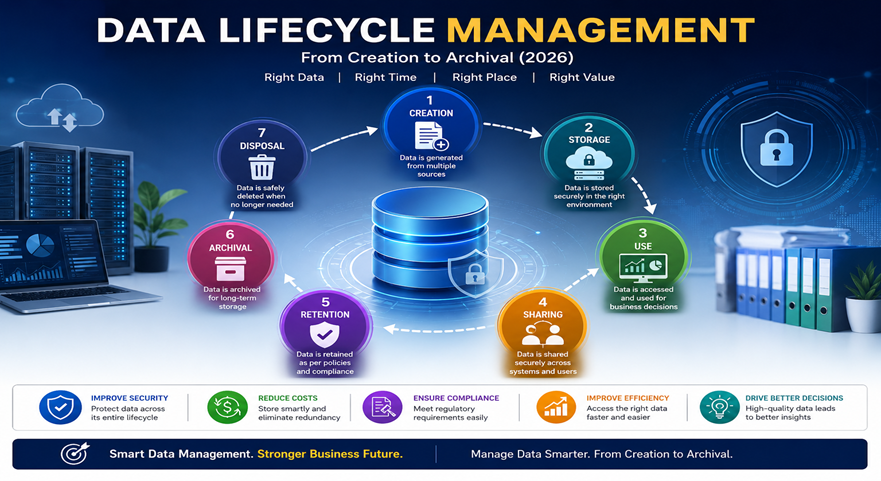
Data Lifecycle Management refers to the complete process of managing data through different stages including creation, storage, usage, sharing, backup, archival, and deletion. The main goal of Data Lifecycle Management is to ensure that data remains valuable and protected throughout its lifecycle.
Organizations rely on Data Lifecycle Management to:
- Improve data security
- Reduce unnecessary storage costs
- Ensure compliance with regulations
- Increase operational efficiency
- Enhance business intelligence
- Simplify data recovery and archival
Modern enterprises using cloud computing, AI analytics, and ERP platforms require advanced Data Lifecycle Management solutions to manage growing datasets effectively.
Key Stages of Data Lifecycle Management
1.Data Creation
The first stage of Data Lifecycle Management begins when data is created. Data can come from:
- Customer transactions
- Business applications
- Websites and mobile apps
- IoT devices
- CRM and ERP systems
- Emails and documents
At this stage, businesses must classify and organize data properly. Proper tagging and categorization help organizations manage data efficiently later in the lifecycle.
2.Data Storage
After creation, the next stage in Data Lifecycle Management is secure storage. Businesses store data using:
- Cloud storage platforms
- On-premise servers
- Hybrid environments
- Data warehouses
Organizations must ensure that stored data remains protected using encryption, role-based access, and backup policies.
Cloud providers such as Microsoft Azure and Google Cloud Storage offer scalable storage solutions for modern enterprises.
Data Usage and Accessibility
One of the most critical stages in Data Lifecycle Management is data usage. Employees, departments, and applications access data daily for reporting, analytics, operations, and decision-making.
Proper Data Lifecycle Management ensures:
- Fast data retrieval
- Secure user access
- Real-time analytics availability
- Reduced downtime
- Better collaboration between departments
Organizations implementing strong accessibility controls improve productivity while minimizing security threats.
Best Practices for Data Access
- Implement multi-factor authentication
- Use role-based permissions
- Monitor user activities regularly
- Encrypt sensitive business data
- Automate backup processes
These strategies improve the effectiveness of Data Lifecycle Management while ensuring data protection.
Data Sharing and Integration
Modern businesses depend heavily on connected systems. CRM, ERP, marketing automation, finance, and analytics platforms constantly exchange information.
Efficient Data Lifecycle Management allows secure integration between systems while maintaining data consistency. Businesses often use APIs, cloud connectors, and middleware platforms to synchronize information.
For example, companies using Oracle ERP or Salesforce require seamless integration to manage customer and operational data effectively.
Benefits of Secure Data Integration
- Better reporting accuracy
- Reduced duplicate records
- Improved workflow automation
- Faster business operations
- Centralized information management
Strong Data Lifecycle Management practices ensure that shared data remains accurate and secure.
Backup and Disaster Recovery
Data loss can severely impact business continuity. Cyberattacks, hardware failures, accidental deletions, or natural disasters can destroy critical business information.
An effective Data Lifecycle Management strategy always includes backup and disaster recovery planning.
Important Backup Strategies
- Automated cloud backups
- Daily incremental backups
- Disaster recovery testing
- Multi-location data replication
- Secure recovery systems
According to Cisco, proactive data security and backup planning are essential for minimizing operational disruptions.
Businesses investing in robust Data Lifecycle Management systems recover faster from unexpected incidents.
Data Archival in 2026
As businesses grow, not all data needs immediate access. Older records, historical reports, compliance documents, and inactive files are moved into archival storage.
Data Lifecycle Management helps organizations archive data intelligently while ensuring long-term accessibility when required.
Why Data Archival Matters
- Reduces primary storage costs
- Improves system performance
- Simplifies compliance management
- Preserves historical business records
- Enhances long-term data organization
Modern archival solutions use AI-powered indexing and automated retention policies to improve efficiency.
Platforms like Veritas and Dell Technologies provide enterprise-grade archival and storage solutions.
Data Deletion and Compliance
The final stage of Data Lifecycle Management involves secure deletion or destruction of unnecessary data. Businesses must remove outdated records responsibly to avoid legal and security risks.
Compliance Requirements in 2026
Organizations must follow data protection regulations such as:
- GDPR
- HIPAA
- ISO security standards
- Industry-specific compliance frameworks
Improper data handling may lead to legal penalties, reputational damage, and security breaches.
Proper Data Lifecycle Management ensures that sensitive data is deleted securely using approved retention policies.
Benefits of Data Lifecycle Management for Businesses
Implementing Data Lifecycle Management provides multiple long-term business advantages.
Improved Data Security
Businesses can protect sensitive customer and financial information using encryption, monitoring, and controlled access.
Lower Operational Costs
Archiving inactive data reduces expensive storage consumption and improves infrastructure efficiency.
Better Regulatory Compliance
Organizations can meet legal and industry compliance standards more effectively.
Faster Business Decision-Making
Well-organized data improves analytics, reporting, and business intelligence processes.
Increased Scalability
Modern Data Lifecycle Management solutions support business expansion without overwhelming infrastructure.
Challenges in Data Lifecycle Management
Although Data Lifecycle Management offers significant benefits, businesses still face several challenges.
Common Challenges
- Rapid growth of unstructured data
- Data duplication across systems
- Cybersecurity risks
- Complex compliance requirements
- Legacy infrastructure limitations
- Integration difficulties
Organizations must continuously upgrade their Data Lifecycle Management strategies to overcome these challenges effectively.
Future Trends in Data Lifecycle Management (2026)
The future of Data Lifecycle Management is becoming smarter, faster, and more automated.
AI-Powered Automation
Artificial intelligence is helping businesses automate:
- Data classification
- Retention management
- Security monitoring
- Archival recommendations
- Predictive storage optimization
Cloud-Native Data Management
Cloud platforms continue transforming Data Lifecycle Management by offering scalable and flexible infrastructure.
Zero Trust Security Models
Modern enterprises are implementing Zero Trust frameworks to strengthen data access controls.
Sustainable Data Storage
Green IT initiatives are encouraging organizations to optimize storage consumption and reduce environmental impact.
Best Practices for Effective Data Lifecycle Management
Businesses should follow these proven strategies for successful Data Lifecycle Management implementation.
Recommended Best Practices
- Create clear data retention policies
- Automate backup and archival workflows
- Use cloud-based storage solutions
- Monitor data usage continuously
- Implement strong cybersecurity measures
- Conduct regular compliance audits
- Train employees on data governance
- Remove outdated and duplicate records
Following these practices helps organizations maximize the value of Data Lifecycle Management.
Conclusion
Data growth is accelerating rapidly across every industry, making Data Lifecycle Management more important than ever in 2026. Businesses can no longer rely on outdated storage methods or unmanaged systems to handle sensitive information. From creation and storage to backup, archival, and secure deletion, every stage of the data journey requires a structured strategy.
An effective Data Lifecycle Management approach helps organizations improve security, reduce infrastructure costs, maintain compliance, and increase operational efficiency. Companies that implement automated and cloud-based lifecycle management solutions gain better control over business data while supporting long-term scalability.
As technologies like AI, cloud computing, and automation continue evolving, businesses must modernize their Data Lifecycle Management practices to remain competitive and secure. Organizations investing in smarter data governance today will build stronger, more efficient, and future-ready digital operations for tomorrow.
Looking to implement smarter Data Lifecycle Management solutions for your business?
Tech i-vin Technology helps organizations optimize data management, cloud infrastructure, ERP systems, and digital transformation strategies for long-term business growth.