
End-to-End Order Management Using Salesforce + NetSuite + Celigo
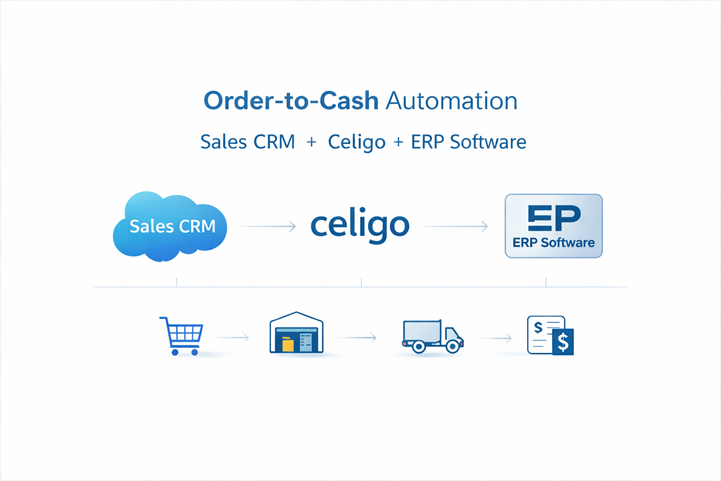
Modern businesses struggle when sales, operations, and finance teams work on disconnected systems. The result is delayed fulfillment, inaccurate inventory, duplicate data entry, and inconsistent customer updates. That’s why End-to-End Order Management Using Salesforce + NetSuite + Celigo has become a practical solution for companies that want speed and accuracy at scale. Salesforce manages customer interactions and order capture, NetSuite handles fulfillment and financials, and Celigo connects both platforms with automation. This integrated approach reduces manual work, improves order visibility, and helps businesses deliver a consistent customer experience—right from order creation to invoicing and payment reconciliation.
What Is End-to-End Order Management?
End-to-end order management is the complete lifecycle of an order—from customer purchase to fulfillment, delivery, invoicing, and payment settlement. When done correctly, it ensures that:
- Orders are captured correctly
- Inventory and pricing are accurate
- Fulfillment happens quickly
- Invoices are generated on time
- Payments are tracked without delays
- Customers always get real-time updates
A well-designed order management process is a major competitive advantage, especially for organizations handling high order volumes or multi-channel commerce operations. Salesforce explains how order management helps manage the entire order lifecycle across channels in a unified way.
Why Combine Salesforce + NetSuite + Celigo for Order Management?
Using the right platform for the right purpose creates a strong operating model:
Salesforce for Order Capture & Customer Experience
Salesforce plays a key role in handling:
- Lead and opportunity conversion
- Customer account information
- Order creation and updates
- Customer service and post-order support
Salesforce Order Management supports tracking and managing orders throughout the order lifecycle.
NetSuite for Fulfillment, Inventory & Financial Control
NetSuite handles:
- Inventory visibility and allocation
- Sales order processing
- Shipping and fulfillment
- Invoicing
- Revenue and accounting
NetSuite order management capabilities include automating sales order processing and streamlining fulfillment and returns.
Celigo as the Integration Engine (Automation Layer)
Celigo’s integrator.io enables prebuilt, scalable sync between Salesforce and NetSuite, helping automate lead-to-cash/order-to-cash processes.
Key Challenges Without an Integrated System
If Salesforce and NetSuite are not connected properly, businesses typically face:
- Manual order entry from CRM to ERP
- Inventory mismatch (overselling/underselling)
- Incorrect pricing/tax mapping
- Delayed fulfillment updates
- Slow invoice generation
- Weak reporting across customer + finance data
This is why End-to-End Order Management Using Salesforce + NetSuite + Celigo becomes essential—because it removes data silos and enforces a single, automated workflow.
End-to-End Order Flow (Salesforce → Celigo → NetSuite → Salesforce)
Below is a practical order management workflow using these 3 platforms.
Step 1 — Order is Created in Salesforce
A customer confirms a purchase and the order is created in Salesforce (via Sales Cloud, B2B Commerce, or Commerce Cloud).
Salesforce becomes the “front office system” that captures:
- Customer details
- Shipping address
- Items and quantities
- Taxes/discounts
- Payment terms
Step 2 — Celigo Syncs Salesforce Order to NetSuite Sales Order
Celigo automatically pushes the Salesforce order into NetSuite as a Sales Order using integration flows. Celigo documents explain enabling the “Salesforce Order to NetSuite Sales Order” sync and updating back NetSuite IDs/status.
Key automation here:
- Field mapping (customer, items, pricing, shipping)
- Validation rules (mandatory fields, formats)
- Error handling + retries
- Duplicate prevention
This is a critical component of End-to-End Order Management Using Salesforce + NetSuite + Celigo.
Step 3 — NetSuite Executes Fulfillment
Once the order is in NetSuite, teams handle:
- Inventory allocation
- Pick-pack-ship
- Fulfillment confirmation
- Tracking details
NetSuite supports automated sales order management including receiving, approving, scheduling, fulfilling, tracking, and collecting payment.
Step 4 — Invoicing & Financial Posting Happens in NetSuite
After fulfillment:
- Invoice is generated
- Accounts Receivable updated
- Revenue posted
- Tax calculations finalized
NetSuite describes the order-to-cash steps including order management, fulfillment, billing, and reporting.
Step 5 — Status Updates Sync Back to Salesforce
Celigo syncs the latest updates back to Salesforce:
- NetSuite order number
- Fulfillment status
- Shipment tracking
- Invoice status
This gives customer-facing teams instant visibility—without logging into ERP.
Core Benefits of End-to-End Order Management Using Salesforce + NetSuite + Celigo
Here are the business outcomes that organizations typically see:
✅ 1) True Real-Time Order Visibility
Sales and support teams can instantly answer:
- “Has the order been shipped?”
- “What’s the delivery tracking?”
- “Is the invoice generated?”
✅ 2) Faster Order-to-Cash Cycle
Less manual work means faster cash flow. NetSuite confirms an efficient O2C process improves cash flow by reducing time from order to payment.
✅ 3) Reduced Errors & Duplicate Data Entry
When Celigo automates data flow, errors drop dramatically.
✅ 4) Scalable Automation for High Volume Orders
Celigo provides prebuilt integration apps to synchronize and automate Salesforce + NetSuite operations.
✅ 5) Improved Customer Experience
Customers get:
- Accurate delivery timelines
- Faster confirmations
- Better service response
This is exactly what End-to-End Order Management Using Salesforce + NetSuite + Celigo is designed to deliver.
Best Practices for Implementation
To ensure success, follow these proven practices:
1) Standardize Master Data
- Items/SKUs
- Customers
- Price books
- Taxes
- Shipping methods
2) Define Clear System Ownership
- Salesforce = customer + order capture
- NetSuite = fulfillment + finance
- Celigo = sync + automation logic
3) Setup Error Handling + Alerts
Celigo flows should include:
- Failed record retry
- Email alerting
- Dashboard monitoring
4) Security & Role Access
Ensure:
- API access controls
- least privilege
- audit logs
Use Cases Where This Integration Works Best
End-to-End Order Management Using Salesforce + NetSuite + Celigo is highly beneficial for:
- B2B manufacturing & distribution
- D2C ecommerce brands
- Subscription-based businesses
- Multi-location fulfillment companies
- Companies scaling across regions
Outgoing Authority Links
- Learn about Salesforce Order Management
- Understand NetSuite Order-to-Cash
- Explore Celigo’s Salesforce–NetSuite Integration App
- Integration flow example: Sync Salesforce Order to NetSuite Sales Order
Conclusion
A reliable order management process is no longer optional—it is a growth requirement. When Salesforce, NetSuite, and Celigo work together, businesses gain a unified view of orders, automate critical workflows, speed up fulfillment, reduce errors, and improve customer satisfaction. Most importantly, End-to-End Order Management Using Salesforce + NetSuite + Celigo ensures the entire order lifecycle is controlled, trackable, and scalable as order volumes grow.
Want to implement End-to-End Order Management Using Salesforce + NetSuite + Celigo with best practices, automation flows, and scalable architecture?
Tech i-vin Technology can help you design, integrate, and optimize your complete Order-to-Cash process.